25 September 2026
How to Design a Custom Engagement Ring: A Step-by-Step Guide
Designing a custom engagement ring is one of the more personal purchases a couple will make, whether they design the ring together or one partner creates it as a surprise. Unlike an off-the-shelf ring, a custom engagement ring is designed around the individual wearer, allowing the couple to choose the center stone, metal, setting, and other details based on their preferences.
The custom ring process begins with a conversation and continues through design, approval, production, and final inspection. Ephraim Doumato Jewelers is here to help you understand each step so you know what to expect before beginning your own custom ring.
Why Choose a Custom Engagement Ring?
An off-the-shelf ring is designed for a general customer. A custom ring is designed for one specific person, which allows more of the ring’s details to reflect the wearer’s style, lifestyle, and preferences.
Some of the reasons couples choose a custom engagement ring include:
- Creating a design that reflects a specific story, style, or personal preference
- Directing the budget toward the features that matter most
- Incorporating a family heirloom diamond or other sentimental stone
- Creating a ring around the wearer’s preferred fit and lifestyle
- Combining elements from different existing ring styles into one design
Custom does not necessarily mean extravagant. A simple custom design can be created around a specific stone, metal, or setting preference without adding unnecessary details.
When Should You Start Designing a Custom Engagement Ring?
It is generally better to begin the process before you need the finished ring in hand. Custom designs involve multiple stages, including consultation, stone selection, design development, approval, production, and final inspection.
If you are planning a proposal around a holiday or another specific date, Ephraim Doumato Jewelers recommends starting the process well in advance, as it gives you more flexibility if the design changes, a particular stone needs to be sourced, or production takes longer than expected.
December is commonly associated with a high volume of proposals, so couples planning a holiday proposal should consider beginning the ring-design process well before the holiday season.
The Custom Engagement Ring Process
Step 1: Start With a Custom Jewelry Consultation
The first step in designing a custom engagement ring is a conversation with Doumato Jewelers. This consultation is where you can discuss what you want the finished ring to look like, what matters most to you, and the choices that will shape the design.
During the consultation, you can explore the major elements of the ring, including the center stone, metal, setting style, and overall appearance. If you have inspiration photos, sketches, family jewelry, or even just a general idea of what you like, these can help communicate your vision. Doumato Jewelers can use that information to help develop the design and explain the options available to you.
The consultation is also where many of the most important decisions begin. You can discuss the type of center stone you want, the shape and size, the metal you prefer, and how you want the finished ring to look and feel. Lifestyle and everyday wear can also be considered when deciding on the design.
For Ephraim Doumato Jewelers, this conversation is an important part of the process because it establishes the direction for the rest of the project. Rather than starting with a predetermined ring, the design develops around the choices discussed during the consultation.
Step 2: Choose the Diamond or Center Stone
Once you have established the direction of the ring, the center stone becomes one of the most important decisions.
For a diamond engagement ring, several characteristics should be considered:
- Shape: Round, oval, cushion, emerald, pear, marquise, and other shapes create different appearances.
- Carat weight: Carat refers to the weight of the diamond, not simply its visible size.
- Color: Diamond color grades describe how much color is present in a diamond.
- Clarity: Clarity describes the presence of internal and external characteristics within the stone.
- Cut: Cut and shape are different. Shape describes the outline of the diamond, while cut describes how effectively the diamond’s facets interact with light.
Another choice to make during the consultation is whether to select a natural or laboratory-grown diamond.
Laboratory-grown diamonds are diamonds. According to the Gemological Institute of America, they have essentially the same chemical, physical, and optical properties as natural diamonds. The primary distinctions are their origin and value. Natural diamonds form naturally within the Earth and keep a consistent value over time, while laboratory-grown diamonds are produced through controlled laboratory processes and do not carry their value over time.
Lab-Grown Diamonds Have Become a Significant Part of the Engagement-Ring Market
The number of engagement rings containing lab-grown diamonds has increased substantially in recent years. BriteCo’s current appraisal data shows the share of new engagement rings containing a lab-grown center stone rising from 5.9% in 2019 to 47.0% in 2025.
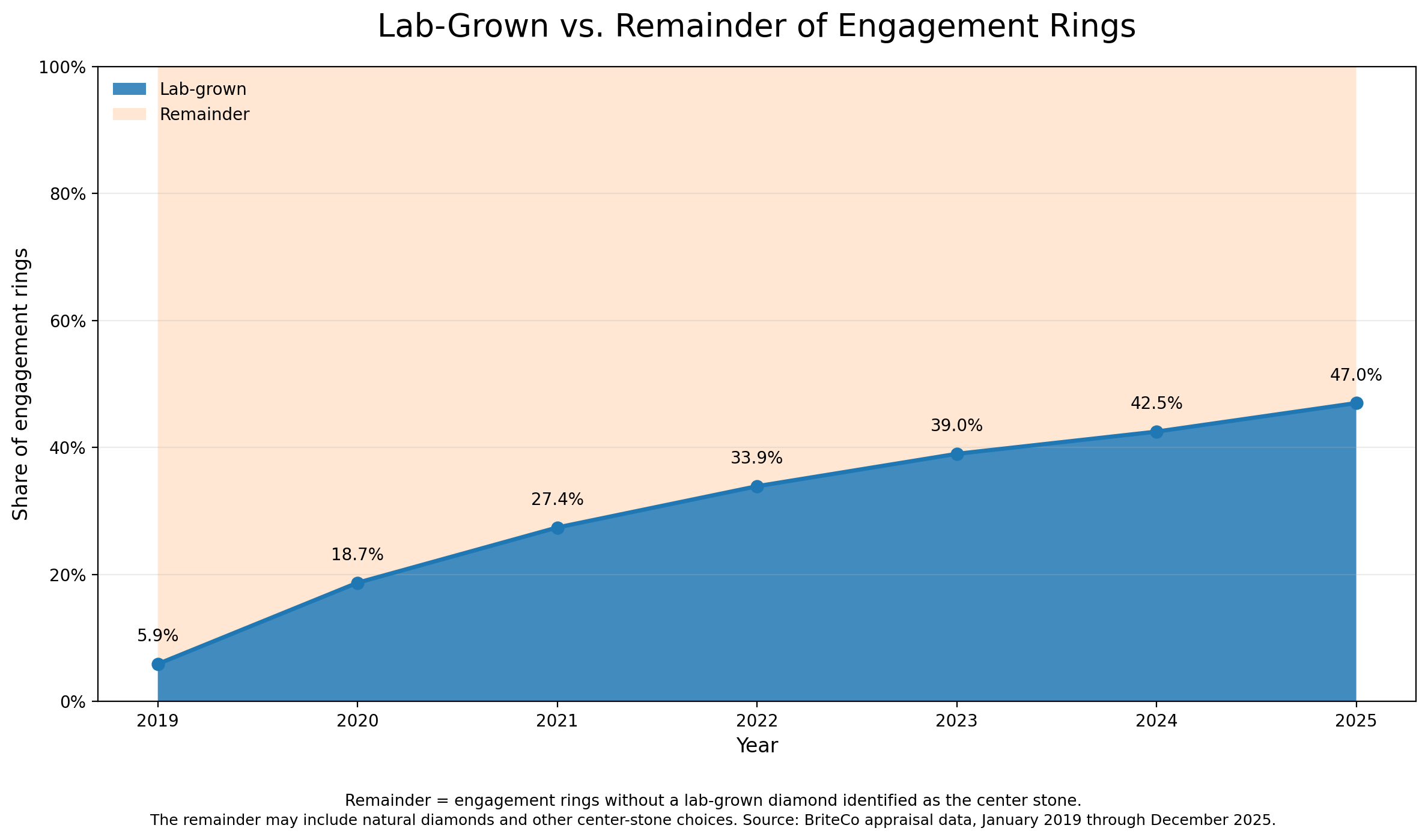
The remainder represents engagement rings in BriteCo’s data that did not have a lab-grown diamond identified as the center stone. It may include natural diamonds as well as other center-stone choices. BriteCo’s current lab-grown share statistic does not break that remainder into individual categories.
This trend does not mean one type of diamond is right for everyone. It shows that laboratory-grown diamonds have become an increasingly common option for couples designing engagement rings. Understanding the differences between natural and lab-grown diamonds gives you another factor to consider when selecting a center stone.
Step 3: Choose the Metal
The metal is another major design decision. Common choices include platinum and gold in yellow, white, or rose tones.
Metal affects the appearance, durability, and cost of the ring. Your everyday activities and lifestyle can also be considered when choosing the appropriate metal.
The metal can be selected to complement the center stone and overall design, whether you prefer a traditional appearance, a modern look, or something more distinctive.
Step 4: Design the Setting and Overall Style
With the center stone and metal selected, the design can begin to take shape.
Some common engagement-ring styles include:
- Solitaire: A simple design centered around one primary stone.
- Halo: Smaller stones surround the center stone.
- Pavé: Small stones are set closely together along the band or setting.
- Three-stone: A center stone is accompanied by two additional stones.
- Vintage-inspired: Design elements draw from historical jewelry styles.
A custom design does not have to fit into one category. Elements from different styles can be combined to create something specifically suited to the wearer.
Step 5: Review the Design
Once the basic design has been established, Doumato Jewelers can develop a more detailed representation of the finished ring. Utilizing precision CAD technology, Ephraim Doumato Jewelers creates a detailed digital 3D model so that you can view the ring from any direction before the design is finalized.
This stage gives you an opportunity to see how the different elements work together before the ring is produced. It is also where design adjustments can be considered before the project moves into production.
Step 6: Review a Wax Model
Ephraim Doumato produces a physical wax or 3D-printed model before the ring is produced in metal, as a physical model can provide another way to evaluate the ring’s proportions, shape, and overall appearance before casting.
Step 7: Casting, Setting, and Finishing
Once the design has been approved, production can begin.
The ring is cast in the selected metal, followed by setting the center stone and any additional stones. Detail work, polishing, engraving, and other finishing work can then be completed as required by the design.
At this point, the design has moved from planning into production.
Step 8: Final Inspection and Delivery
Before the finished ring is delivered, it is inspected, polished, and checked against the approved design.
The final inspection is an opportunity to ensure that the finished piece meets the specifications established during the design process before it goes home with the customer.
After the final inspection, you are left with a custom engagement ring perfect for your partner.
Sources
- BriteCo. “Jewelry, Diamond, & Watch Price Index 2026.” BriteCo Research.
https://brite.co/research/jewelry-diamond-watch-price-index/
Used for lab-grown engagement-ring market-share data from 2019 through 2025, as well as natural and lab-grown engagement-ring pricing data. - Gemological Institute of America (GIA). “Is There a Difference Between Natural and Laboratory-Grown Diamonds?”
https://www.gia.edu/gia-news-research/difference-between-natural-laboratory-grown-diamonds
Used for information regarding the chemical, physical, and optical similarities between natural and laboratory-grown diamonds and the differences in their origins. - The Knot Research & Insights Team. “The Knot Real Weddings Study: Data Read-Out (2026).” Updated February 17, 2026.
https://www.theknot.com/content/wedding-data-insights/real-weddings-study
The study surveys U.S. couples married in 2025 and provides data on engagement, proposal trends, wedding planning, costs, and other wedding-related topics.